

Instagram post templates for coaches
Show a practical planning process with portrait examples from Small Step Studio, a fictional coach for freelance designers.
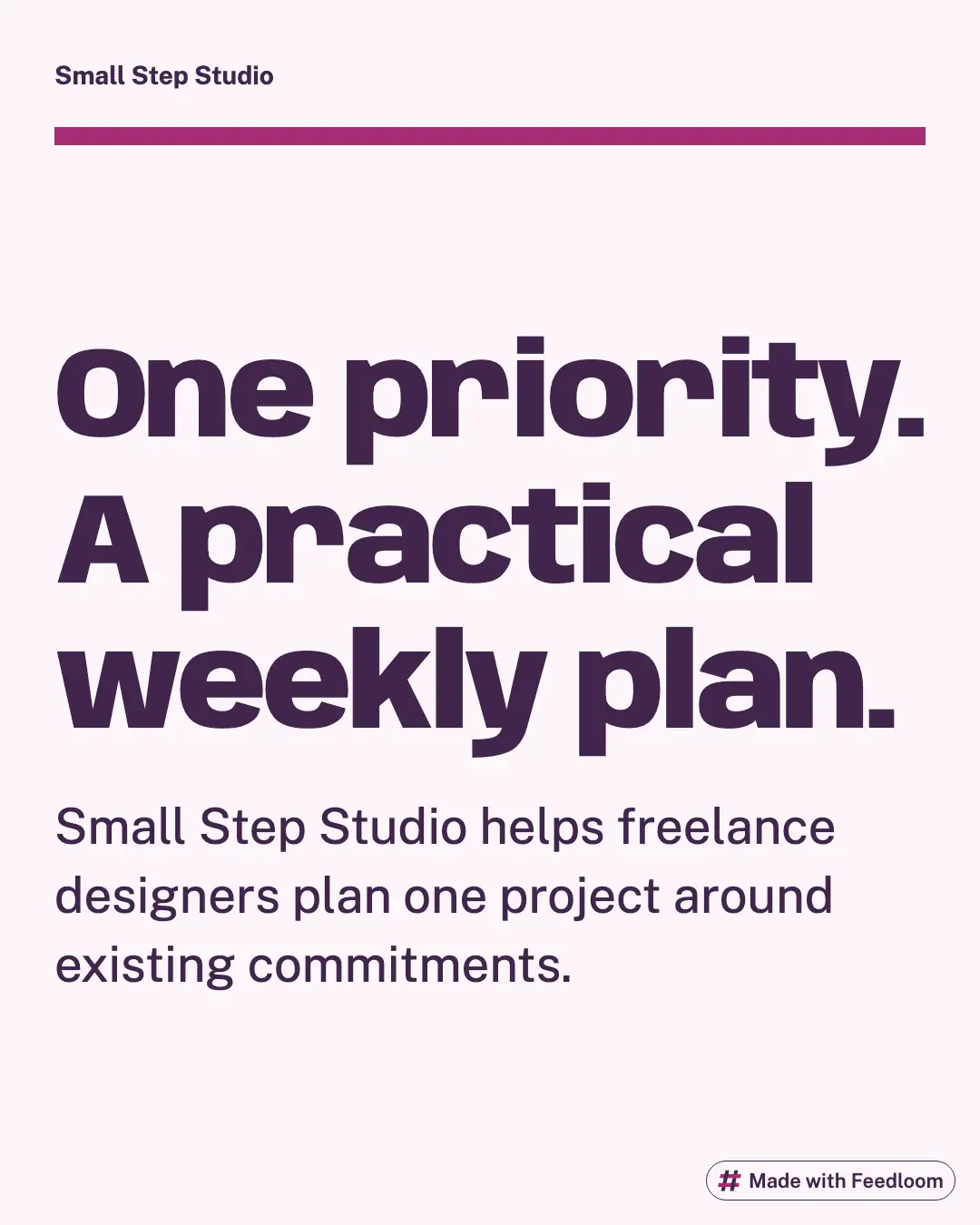
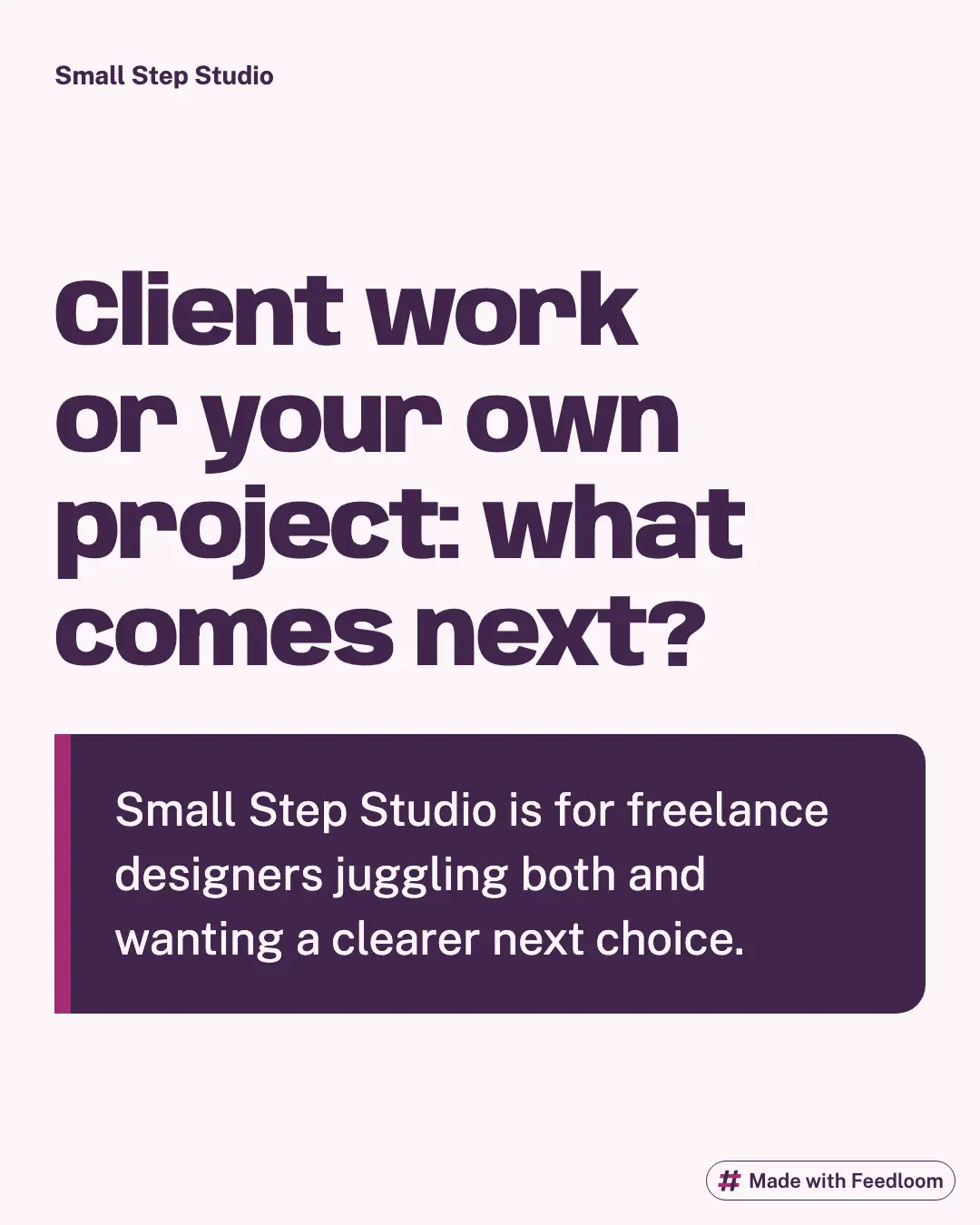
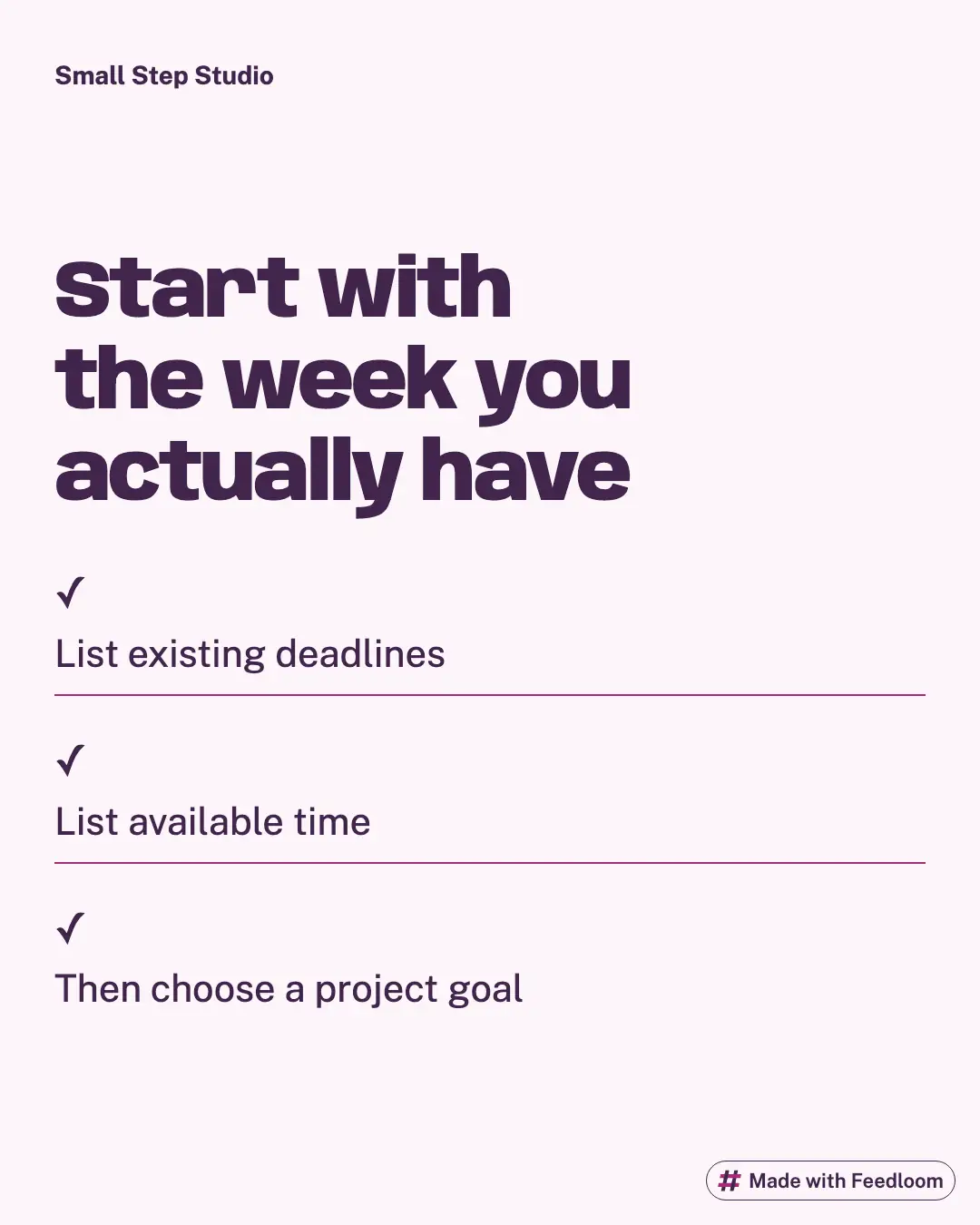
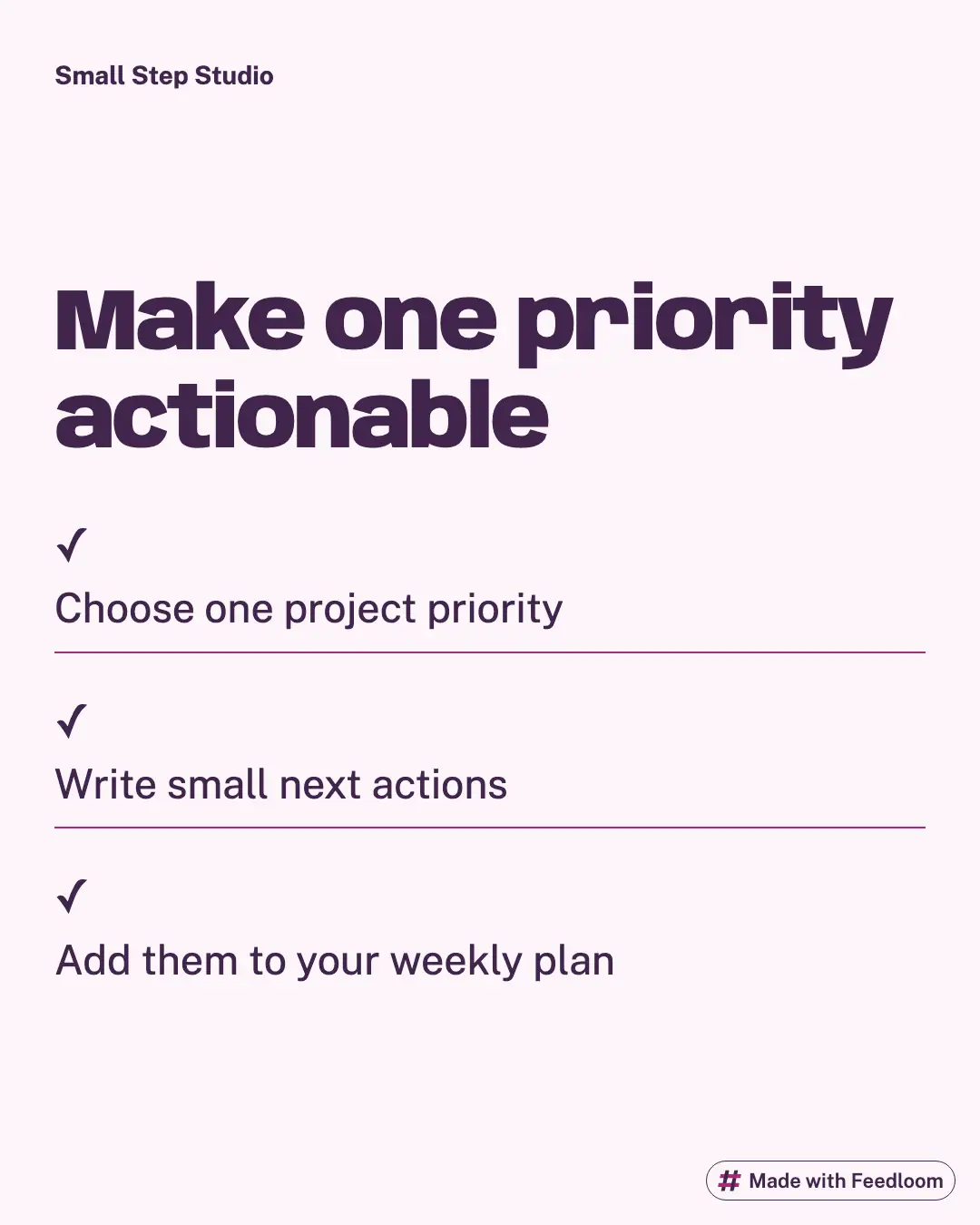
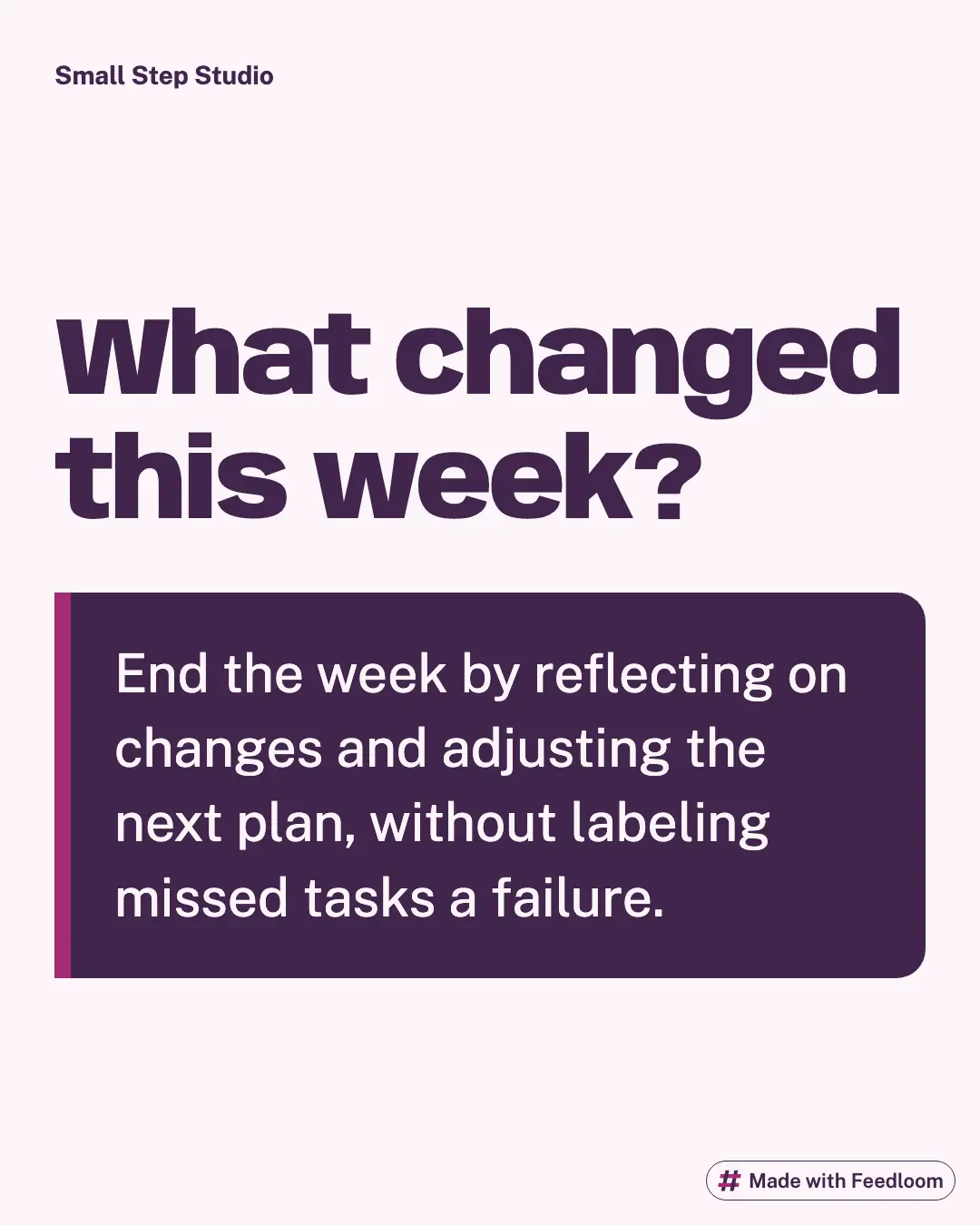
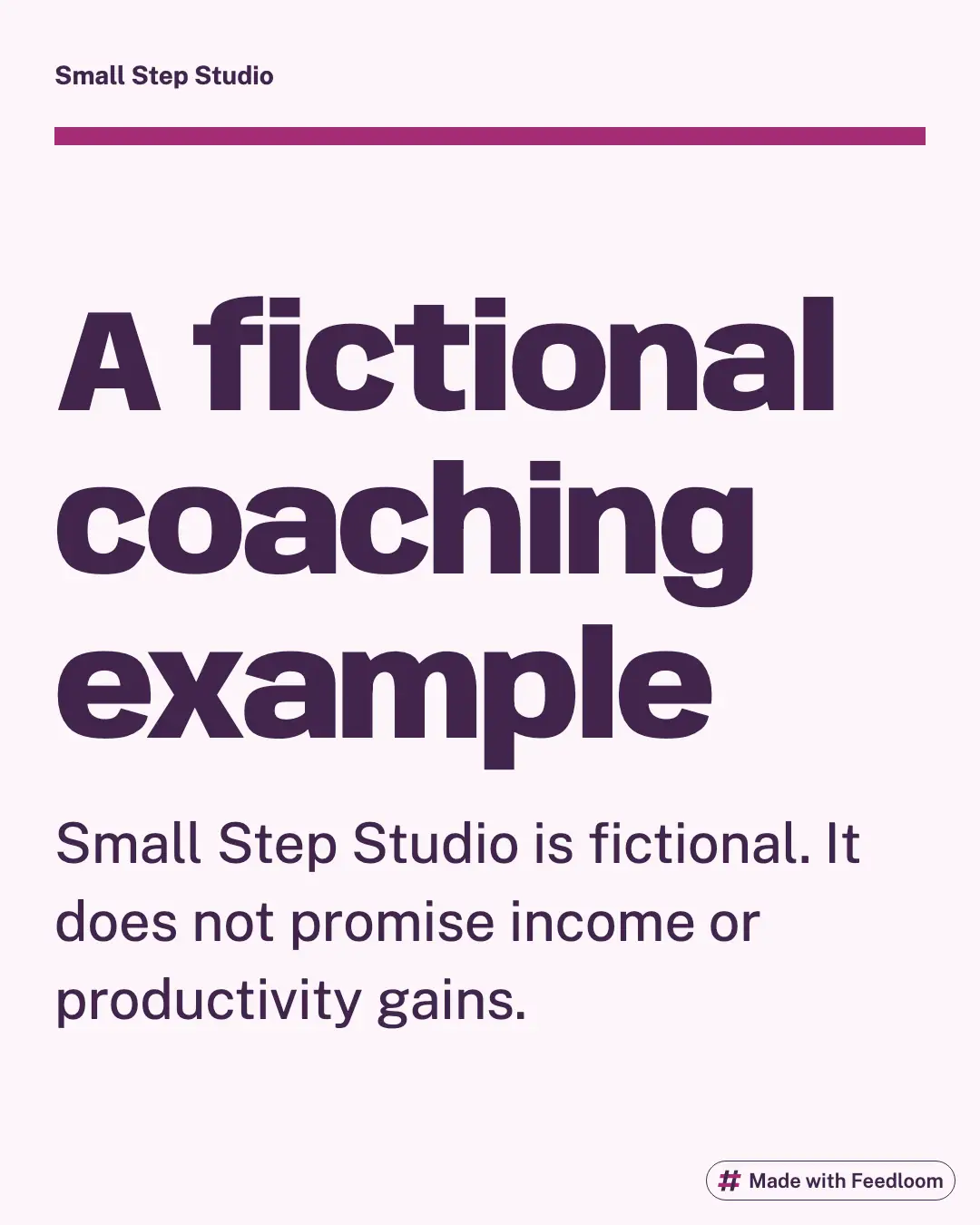
Fictional sample brand: Small Step Studio. Real Feedloom renders from the notes below; not customer results.
What we gave Feedloom
Small Step Studio helps freelance designers choose a project priority and prepare a weekly plan around existing commitments. The fictional sessions begin with deadlines and available time, turn a priority into small actions and end the week with reflection. The brief rules out income promises, productivity guarantees, therapy claims and invented testimonials. The sample demonstrates a process a reader can consider, not a result they should expect to achieve.
Let a small action carry the post
Coaching copy becomes easier to assess when it describes what happens in a session. For this collection, use one practical prompt at a time: list the commitments already in the diary, name the project that needs attention or write the next action in ordinary language. A portrait card should feel like an invitation to think, not a diagnosis of the reader’s habits. Avoid turning a missed task into a moral failure. The fictional brand’s approach is to notice what changed and revise the plan. If your real coaching method differs, describe your own process honestly. You do not need a dramatic transformation story to explain a useful question. Let the reader decide whether that question fits their situation.
Leave breathing room for reflection
The sample uses short text with visible space around it. The native portrait dimensions are recorded with the renders below. These margins are a Feedloom design recommendation rather than a platform rule. A caption can expand the prompt with a concrete freelance-design example: a client revision takes longer than expected, so the personal project needs a smaller next step. Keep that scenario labelled as an illustration unless it comes from a consenting client. Do not publish private project details to make a post feel authentic. Use a simple question at the end and let the answer be personal; there is no need to demand that someone share sensitive circumstances in the comments.
Eight angles to adapt
- Ask which commitment is already fixed before adding another goal to the week.
- Invite a designer to describe one project priority in a single plain sentence.
- Turn a vague task such as improve portfolio into a specific next action.
- Show a planning prompt for a week interrupted by unexpected client revisions.
- Explain why reviewing a plan can mean changing it rather than trying harder.
- Suggest a reflection question about what felt manageable during the week.
- Distinguish a small next action from a promise to finish an entire project.
- Describe the opening of a session without inventing a client success story.
A four-week example
- Week one: introduce the planning conversation and list existing commitments.
- Week two: focus on choosing a priority and writing a small next action.
- Week three: show how a client revision can change the shape of the week.
- Week four: use reflection prompts to adjust the next plan without blame.
Render sizes and sources
Source renders: 1080 × 1350 pixels (4:5). The gallery uses smaller WebP previews of the same composition.
Source and input notesChecked 2026-10-04
Questions about these examples
Can I promise better productivity?
Not on the basis of this sample. It contains no outcome evidence. Describe your service, the process and its limitations. A reader should understand what they will do with you before deciding whether to try it.
What about a before-and-after story?
Use a real, consented account with accurate context if you have one. Do not attach an invented transformation to a fictional client. A clearly labelled planning scenario can illustrate an idea without pretending to be proof.
Is this mental health advice?
No. The sample concerns project planning for freelance designers. It provides no clinical qualifications or treatment. Keep your own posts within the actual scope of your service and avoid diagnosing people from ordinary planning difficulties.
How do I adapt the call to action?
Offer a next step that matches your real service, such as reading how a session works or asking about availability. Avoid pressure based on invented scarcity. Give the reader enough information to make a considered choice.
Make these for your site
Create a free account. Feedloom reads your site and designs your first posts.
14 days of Pro free, starting when you connect your first account. No card.